 ENTEK
ENTEKStep inside
protection.
Three technologies. Engineering in every detail. Scroll to discover the layers of protection.
Begin exploringBallistic Protective Vest
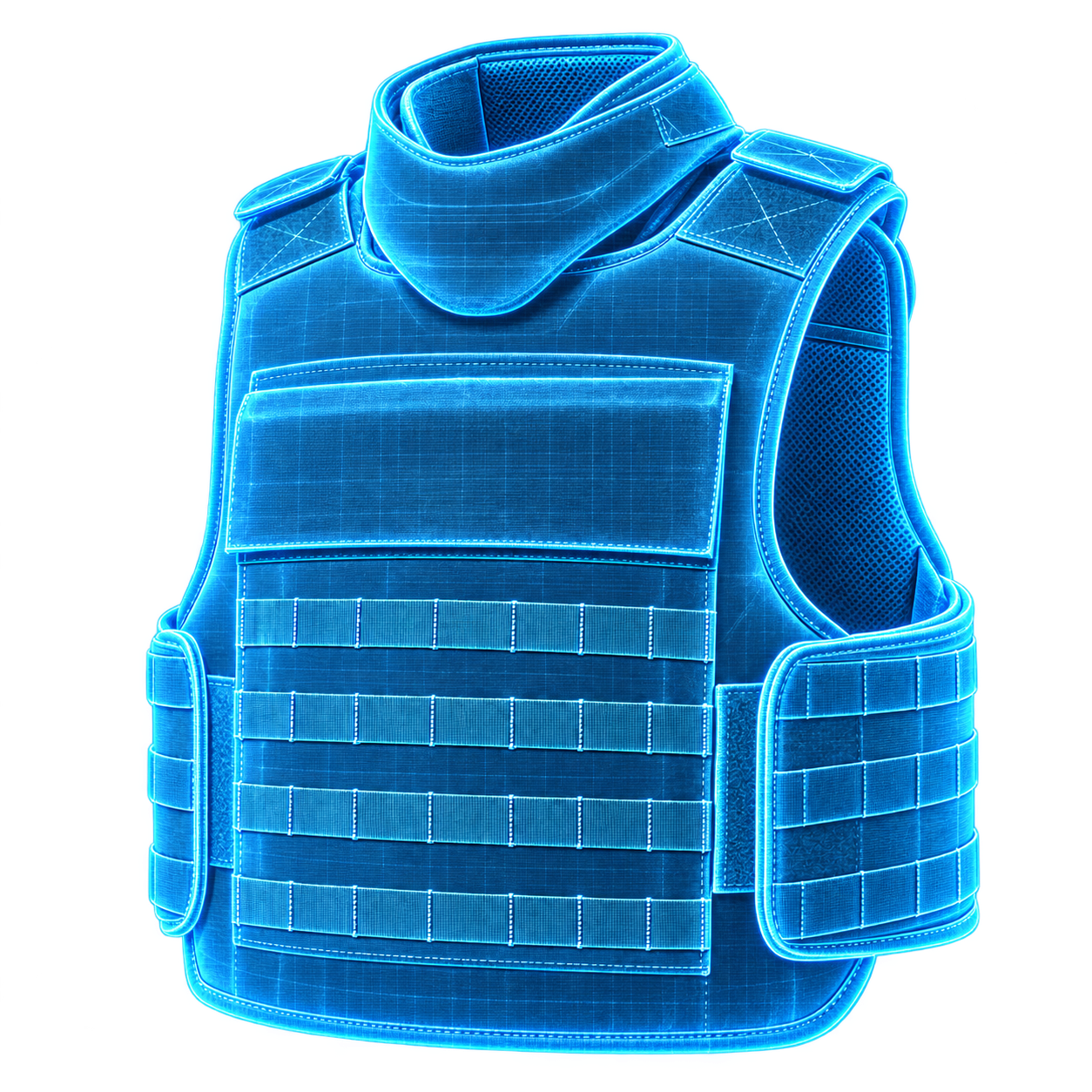
Every detail has a purpose.
Overt ballistic vest, from standard front/rear coverage to a full-coverage model including the arms and groin.
Coverage areas
Front and rear in the standard model; front, rear, arms and groin in the full-coverage model.
Defined threats
9 mm FMJ RN (8.0 g) and .44 Magnum JHP (15.6 g); the source specifies 427 ± 9.1 m/s for both.
Model and options
Overt model in standard sizes. Outer fabric in white, black or the requested colour.
Shelf life
Stated as 10 years in the technical file.
Values are source-file declarations. Test tables concern specific ballistic package specimens; they are not certification for all vest configurations.
View technical document Ballistic Vest Technical Information · p. 2 · PDF- NIJ 0101.04 declaration
- IIIA
- Product weight
- 2,712 g
- Operating temperature
- −35 / +55 °C
- Shelf life · technical file declaration
- 10 years
CBRN Protective Suit

Every detail has a purpose.
Outer fabric and activated-carbon protective layer. A personal protection ensemble approach covering the suit, gloves, overboots and mask.
Protective layer
Laminated spherical activated carbon or laminated activated-carbon fabric is required.
Air permeability
At least 50 L/m²·s air permeability at 100 Pa is required.
Ensemble components
Five overboot sizes and three glove sizes are specified. Butyl rubber is recommended for the overboots.
Use and storage
The suit specification describes 30 days of combat training use after unpacking and a 10-year storage period.
This source is a technical specification. Values are requirements, not tested performance or certification. The 3,250 g limit is for the suit without packaging.
View technical document CBRN Protective Suit · pp. 1–5 · PDF- Suit size range
- XS–XL
- Suit weight requirement
- ≤ 3,250 g
- Operating / storage range
- −35 / +55 °C
Modular Ballistic Block
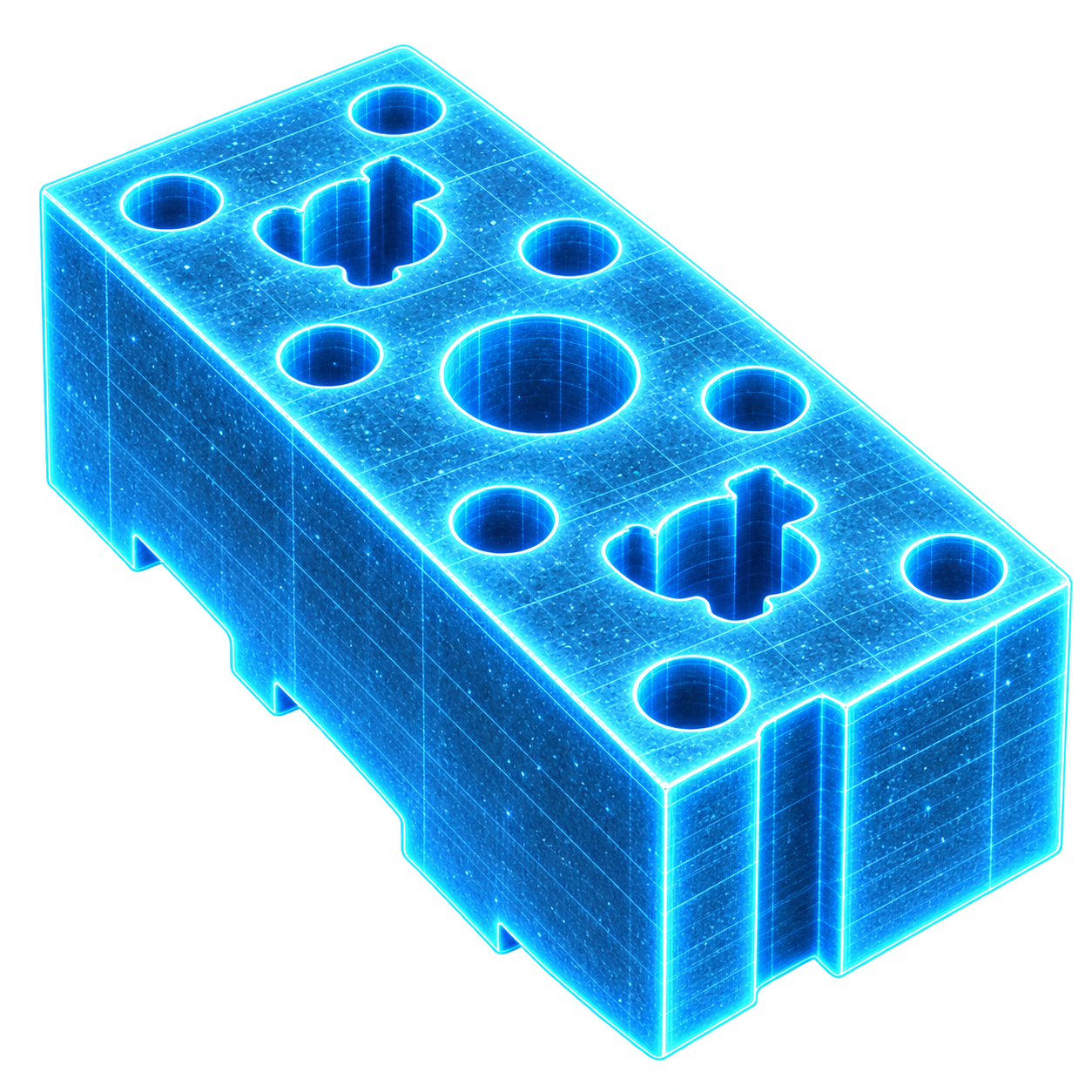
Every detail has a purpose.
Self-interlocking modular concrete blocks. A demountable, reusable building approach for walls, cabins and team shelters.
Interlocking geometry
Complementary self-interlocking blocks that can be disassembled and rebuilt.
Assembly approach
Described in the catalogue as dry assembly without mortar or adhesive.
Material testing
The TSE report gives an average compressive strength of 26.8 N/mm² for the tested specimens.
Application scales
Ballistic walls, security cabins, team shelters and modular structures.
TSE results apply only to the tested specimens, not product certification. They do not establish whole-structure protection; foundations, connections and application conditions require separate assessment.
View technical document Ballistic Lego Blocks · pp. 11, 19–20, 23 · PDF- Nominal dimensions · mm
- 500 × 250 × 125
- TSE specimen average
- 26.8 N/mm²
- Mortar-free connection
- Dry assembly